
Moving out of an office involves more than packing furniture and transferring equipment to a new location. Depending on the tenancy agreement, businesses may also need to restore the existing premises before returning the property to the landlord.
This process is commonly referred to as office reinstatement.
For tenants searching for office reinstatement Singapore services, understanding the requirements early can make the move-out process much easier. Office partitions, built-in cabinets, reception counters, signage, flooring and other tenant-installed features may need to be removed or restored before the final handover.
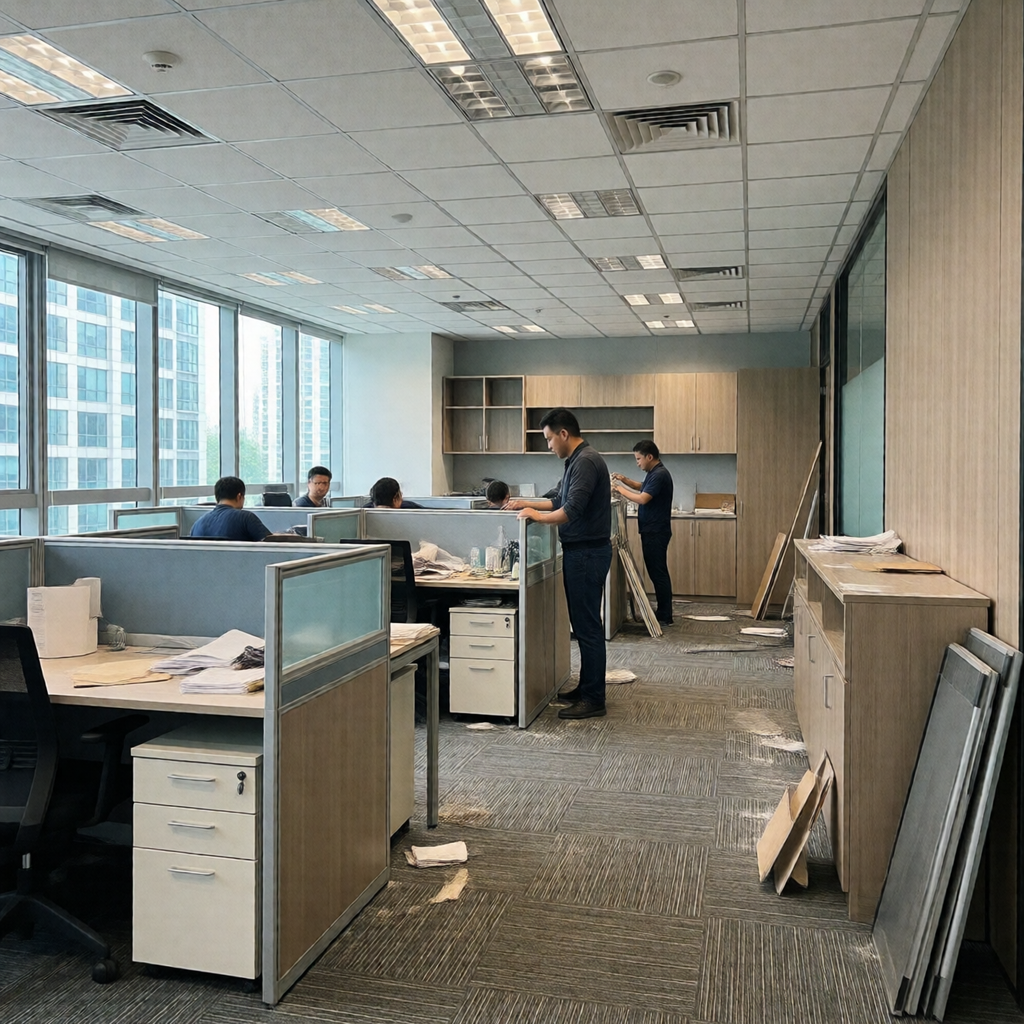
A well-planned reinstatement project can help businesses avoid rushed work, unexpected costs and delays at the end of the tenancy.
Table of Contents
- What Is Office Reinstatement?
- Why Do Offices Need Reinstatement?
- What Office Features May Need to Be Removed?
- Start by Reviewing Your Tenancy Requirements
- Inspect the Office Before Moving Out
- Plan Reinstatement Around Your Moving Schedule
- Common Office Reinstatement Work
- Why Reinstatement Can Take Longer Than Expected
- Choosing an Office Reinstatement Contractor
- Preparing for the Final Handover
- Conclusion
What Is Office Reinstatement?
Office reinstatement is the process of restoring a rented office to the condition required for handover at the end of a tenancy.
During an office tenancy, businesses commonly customise their workspace to suit their operations.
A company may install meeting rooms, private offices, storage cabinets, feature walls, reception counters and branding elements. These changes can make the workplace more functional, but some may need to be removed when the business leaves.
Reinstatement can therefore involve a combination of dismantling, removal, repairs and restoration.
The exact scope depends on the property’s requirements and the agreement between the landlord and tenant.
It is important to understand that reinstatement is not necessarily the same as returning every part of the office to its original condition. The actual handover requirements should be confirmed before work begins.
Why Do Offices Need Reinstatement?
Commercial office spaces are often occupied by different businesses over time.
Each tenant may have different requirements for layout, branding and workspace design. A meeting room arrangement that works for one company may not be suitable for the next tenant.
For this reason, landlords may require certain tenant-installed modifications to be removed before the property is returned.
Examples can include:
- Office partitions
- Glass meeting rooms
- Built-in cabinets
- Reception counters
- Feature walls
- Company signage
- Custom flooring
- Tenant-specific fixtures
The purpose of reinstatement is generally to prepare the premises for the next stage of its use.
Tenants should therefore identify the required restoration work before the final weeks of the tenancy.
What Office Features May Need to Be Removed?
The amount of reinstatement work depends heavily on what has been installed during the tenancy.
A relatively simple office may contain only a few partitions and signs.
A larger office could contain multiple meeting rooms, storage systems, built-in furniture and extensive customisation.
Common items that may require attention include:
Office Partitions
Drywall and glass partitions can change the original layout of the office. If they are included in the reinstatement requirements, they may need to be dismantled.
Built-In Cabinets
Storage cabinets and shelving fixed to walls or floors may need to be removed.
Reception Counters
Custom reception desks can be another major installation that requires dismantling and removal.
Feature Walls
Decorative walls, branding structures and other customised features may need to be removed.
Signage
Company logos, wall signs and other branding elements may need to be taken down.
Flooring
Flooring installed or modified during the tenancy may require restoration depending on the agreed handover condition.
The important point is to avoid making assumptions about what must be removed. Confirm the required scope first.
Start by Reviewing Your Tenancy Requirements
Before contacting a contractor, review your tenancy agreement and any handover instructions provided by the landlord or building management.
Look for requirements relating to:
- Partitions
- Flooring
- Walls
- Ceilings
- Doors
- Built-in fixtures
- Signage
- Electrical modifications
- Other tenant installations
The tenant should also identify the expected handover date.
If any requirement is unclear, clarify it before reinstatement work starts.
This can prevent two common problems.
The first is removing something that could have remained, creating unnecessary work.
The second is leaving something behind that the landlord expects to be removed.
A clear scope provides a better foundation for both budgeting and project planning.
Inspect the Office Before Moving Out
A physical inspection is an important part of planning office reinstatement.
Walk through the entire premises and identify all areas that have been modified since the beginning of the tenancy.
Photographs can be useful for documenting the current condition.
Pay attention to:
- Meeting rooms
- Private offices
- Reception areas
- Storage areas
- Pantry
- Corridors
- Feature walls
- Flooring
- Ceilings
- Service areas
Look behind cabinets and around partitions where possible.
Some damage or modifications may not be obvious while furniture and equipment are still in place.
A contractor can then use this information to assess the work required and prepare a quotation.
Plan Reinstatement Around Your Moving Schedule
Office relocation and reinstatement should be planned together.
The reinstatement contractor may not be able to start certain work until furniture, computers, equipment and other business belongings have been removed.
A typical sequence may look like:
Business clearance → furniture removal → dismantling → restoration → repairs → waste removal → cleaning → inspection → handover
The exact order will depend on the project.
For example, some fixtures may be removed before movers arrive, while other work may only be possible after the office has been completely cleared.
Planning the sequence in advance can reduce conflicts between movers and contractors.
It also gives the business a clearer idea of when the old office will be ready for handover.
Common Office Reinstatement Work
The scope of office reinstatement Singapore projects can vary significantly.
Some of the most common work includes dismantling and removing partitions.
Once partitions are removed, the affected walls, floors and ceilings may require repairs.
Other work can include:
- Wall patching
- Surface restoration
- Flooring repairs
- Ceiling repairs
- Fixture removal
- Signage removal
- Built-in furniture dismantling
- Waste disposal
- Final cleaning
The condition of the office after dismantling can affect the amount of restoration required.
For example, removing a cabinet may expose fixing holes or damaged wall finishes.
Removing a partition may leave marks on the floor or ceiling.
These areas should be addressed before the final inspection if they fall within the agreed handover scope.
Why Reinstatement Can Take Longer Than Expected
Tenants sometimes underestimate the time required because they focus mainly on dismantling.
However, dismantling is only one stage of the process.
After an installation is removed, the affected area may need to be repaired and finished.
Several factors can extend the project:
Large Office Area
Larger premises naturally require more time for inspection, dismantling and restoration.
Extensive Modifications
An office with many meeting rooms, partitions and built-in fixtures may require significant work.
Hidden Damage
Damage behind installations may only become visible after dismantling.
Waste Removal
Large quantities of construction waste need to be cleared from the premises.
Building Restrictions
Access hours and building procedures can affect when work can be performed.
Final Inspection
If outstanding defects are identified during inspection, additional rectification may be necessary.
For these reasons, tenants should allow a reasonable buffer before the final handover date.
Choosing an Office Reinstatement Contractor
Selecting the right contractor is an important part of the process.
When comparing an office reinstatement contractor Singapore businesses can use, look for relevant commercial experience rather than relying solely on the quoted price.
Consider whether the contractor has experience with:
- Office partition dismantling
- Commercial reinstatement
- Wall restoration
- Flooring work
- Ceiling repairs
- Built-in fixture removal
- Signage removal
- Waste disposal
- Commercial handover preparation
Ask for a detailed quotation based on the actual condition of the office.
A clear quotation should explain the scope of work and identify any exclusions.
This makes it easier to compare different contractors and reduces the chance of misunderstandings.
Preparing for the Final Handover
Before the landlord or building representative conducts the final inspection, carry out your own inspection.
Check every area of the office and confirm that the agreed reinstatement work has been completed.
Pay attention to:
- Walls
- Floors
- Ceilings
- Doors
- Partitions
- Built-in fixtures
- Signage
- Service areas
- Storage spaces
The office should also be cleared of unwanted furniture, equipment and construction debris.
A clean and empty premises makes the final inspection easier.
If possible, take photographs of the completed premises for your own records.
If any outstanding work is identified during the pre-handover inspection, arrange for it to be completed before the official inspection.
How Early Should You Start?
There is no single timeframe that applies to every office, because the scope of work can vary significantly.
However, reinstatement should be considered well before the tenancy ends.
Starting early gives you time to:
- Review the tenancy requirements
- Inspect the premises
- Identify modifications
- Obtain quotations
- Appoint a contractor
- Coordinate the office move
- Complete restoration
- Conduct a pre-handover inspection
- Address unexpected issues
Waiting until the final few days creates unnecessary pressure.
If hidden damage or additional restoration is discovered, there may be insufficient time to correct it before the handover deadline.
Conclusion
Office reinstatement is an important part of moving out of a commercial property in Singapore.
Businesses may need to remove partitions, built-in fixtures, signage and other tenant-installed features while restoring affected walls, flooring and ceilings.
The exact requirements depend on the tenancy and the expected handover condition, so tenants should clarify the scope before work begins.
Planning early is one of the best ways to avoid last-minute problems. Review the tenancy requirements, inspect the premises, coordinate the relocation and appoint a suitable contractor with enough time to complete the work.
For businesses preparing to leave a commercial office, professional office reinstatement Singapore services can help manage the dismantling, restoration and preparation required before the final handover.
A clear scope, realistic schedule and thorough pre-inspection can make the move-out process considerably smoother.