
When a business moves out of a commercial property in Singapore, the work does not necessarily end when the furniture and equipment have been removed. Depending on the tenancy agreement and landlord’s requirements, the tenant may also need to restore the premises before returning the property.
This process is commonly known as reinstatement works Singapore.
Reinstatement works can involve dismantling partitions, removing built-in fixtures, restoring walls and flooring, repairing ceilings, removing signage and clearing unwanted materials from the premises.
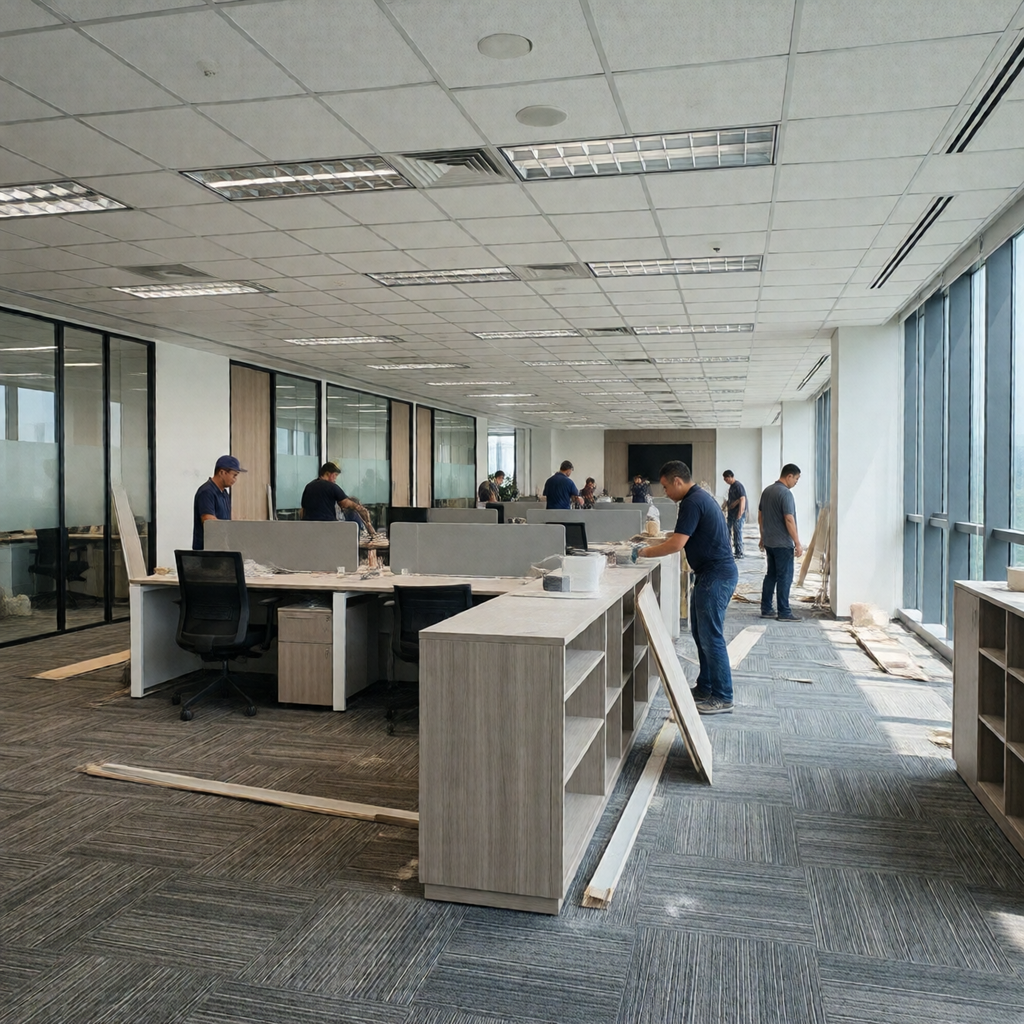
For office and commercial tenants, understanding the reinstatement process early can make the move-out process much easier. It can also help businesses plan their budget, schedule contractors and avoid last-minute problems before the final handover.
Table of Contents
- What Are Reinstatement Works?
- Why Are Reinstatement Works Required?
- What Can Reinstatement Works Include?
- Office Reinstatement Works
- Commercial Property Reinstatement
- Reviewing Your Tenancy Requirements
- Planning the Reinstatement Project
- Common Reinstatement Challenges
- Choosing a Reinstatement Contractor
- Preparing for the Final Handover
- Conclusion
What Are Reinstatement Works?
Reinstatement works refer to the process of restoring a property to the condition required for handover after a tenant’s occupation.
During a tenancy, businesses often make changes to a commercial property to suit their operations. These changes can include installing partitions, meeting rooms, reception counters, storage cabinets, feature walls, flooring and company signage.
When the tenancy ends, some of these additions may need to be removed.
The objective of reinstatement is therefore different from renovation.
Renovation improves or customises a property for the current occupant. Reinstatement generally involves removing tenant-specific modifications and restoring affected areas for the landlord.
The exact scope depends on the property’s requirements and the agreement between the landlord and tenant.
Why Are Reinstatement Works Required?
Commercial properties are often occupied by different businesses over time.
A previous tenant may have designed the office around its own branding, layout and operational requirements. The next tenant may have completely different needs.
For this reason, landlords may require certain tenant-installed modifications to be removed before the premises are returned.
For example, a company may have installed:
- Glass meeting-room partitions
- Drywall partitions
- Custom reception counters
- Built-in storage
- Feature walls
- Company signage
- Special flooring
- Additional fixtures
Some of these installations may need to be removed at the end of the tenancy.
The requirements should be confirmed before work starts rather than relying on assumptions.
What Can Reinstatement Works Include?
The scope of reinstatement varies between properties.
Common work may include dismantling, removal, repair and restoration.
Partition Removal
Office partitions are one of the most common items involved in reinstatement projects.
After partitions are removed, the surrounding walls, floors and ceilings may require restoration.
Wall Restoration
Removing cabinets, signs, partitions and other fixtures can leave holes, marks or damaged finishes.
Restoration may involve repairing the affected surfaces and completing the necessary finishing work.
Flooring Work
Flooring may be affected by partitions, cabinets and other fixed installations.
Depending on the handover requirements, damaged or modified flooring may need to be restored.
Ceiling Restoration
Partition removal and previous office modifications can affect ceiling panels and finishes.
Any required repairs should be completed before the final inspection.
Built-In Fixture Removal
Reception counters, cabinets, shelving and other fixed structures may need to be dismantled and removed.
Signage Removal
Company logos, wall signs and other tenant-specific branding may need to be removed from the premises.
Site Clearing
Dismantling work creates construction waste and unwanted materials.
The premises should be cleared so that the landlord can properly inspect the completed reinstatement.
Office Reinstatement Works
Office reinstatement can be more complicated than simply removing furniture.
A modern office may contain several layers of tenant improvements.
For example, a company could have converted an open-plan area into multiple meeting rooms. This might involve partitions, doors, flooring transitions, ceiling modifications, lighting changes and built-in furniture.
When the tenant moves out, removing the meeting rooms may therefore require several types of work.
A typical office reinstatement project could involve:
Furniture removal → partition dismantling → fixture removal → surface restoration → flooring and ceiling repairs → waste removal → cleaning → final inspection
The exact sequence depends on the condition and requirements of the premises.
Businesses should assess the complete office rather than focusing only on the most obvious installations.
Commercial Property Reinstatement
Reinstatement is not limited to traditional office spaces.
Commercial properties such as retail units, showrooms, clinics, studios and other business premises may also require restoration when a tenancy ends.
The work can vary significantly depending on the type of business.
A retail tenant may have installed display structures and branding.
A showroom may have extensive built-in features.
An office may have multiple partitions and meeting rooms.
A commercial unit used for another purpose may have additional modifications that require removal.
This is why a site inspection is useful before preparing a reinstatement quotation.
The contractor can assess the existing condition and identify the work required based on the intended handover condition.
Reviewing Your Tenancy Requirements
One of the first steps in planning reinstatement works Singapore businesses should take is to review the tenancy agreement and any relevant handover instructions.
Look for information about:
- Required restoration
- Tenant-installed fixtures
- Partitions
- Flooring
- Ceilings
- Signage
- Building services
- Handover condition
- Inspection procedures
- Completion deadlines
The tenant should also clarify any areas where the requirements are unclear.
For example, a tenant should not automatically assume that every fixture installed during the tenancy must be removed.
Likewise, it should not assume that an installation can remain simply because it appears to be in good condition.
Confirming the expected scope early can help avoid unnecessary work and disagreements later.
Planning the Reinstatement Project
Reinstatement should be planned well before the tenancy ends.
The first step is to identify the required scope.
Next, arrange a site inspection and obtain quotations from suitable contractors.
Once a contractor has been selected, establish a schedule that allows enough time for:
- Dismantling
- Removal
- Repairs
- Restoration
- Waste disposal
- Cleaning
- Pre-handover inspection
- Final landlord inspection
It is important not to schedule the work so close to the tenancy deadline that there is no time for corrections.
Unexpected problems can occur after dismantling begins.
For example, removing a partition may reveal damaged flooring or ceiling areas that were previously hidden.
A reasonable time buffer gives the contractor an opportunity to address such issues.
Common Reinstatement Challenges
Several issues can make reinstatement more complicated than expected.
Unclear Requirements
If the landlord and tenant have different expectations, additional work may be required.
Hidden Damage
Areas behind cabinets or partitions may contain damage that was not visible during the initial inspection.
Tight Deadlines
Waiting until the final days of a tenancy can make the project unnecessarily stressful.
Multiple Contractors
Using several contractors without proper coordination can create scheduling problems.
Waste Disposal
Large quantities of dismantled materials require appropriate removal and site clearing.
Last-Minute Changes
Changes to the scope after work has started can affect both cost and completion time.
Good preparation can reduce many of these problems.
Choosing a Reinstatement Contractor
The contractor you select can have a significant impact on the project.
When searching for a reinstatement contractor Singapore businesses can work with, consider their experience with commercial properties and previous reinstatement projects.
Useful areas to evaluate include:
- Commercial reinstatement experience
- Partition dismantling
- Wall restoration
- Flooring work
- Ceiling restoration
- Built-in fixture removal
- Signage removal
- Waste disposal
- Project coordination
- Handover preparation
Ask for a clear quotation that explains what is included and what is excluded.
Comparing contractors based only on the lowest price can be misleading if different quotations cover different scopes.
A detailed quotation makes it easier to compare the actual work being offered.
Preparing for the Final Handover
Before the landlord’s final inspection, carry out a complete review of the premises.
Walk through every area and check whether the required reinstatement work has been completed.
Pay particular attention to:
- Walls
- Flooring
- Ceilings
- Partitions
- Doors
- Built-in fixtures
- Signage
- Electrical-related modifications
- Storage areas
- Service areas
The premises should also be cleared of furniture, equipment and construction debris.
A clean and empty property makes it easier to identify any remaining problems.
If possible, carry out a pre-handover inspection with the contractor before the official landlord inspection.
This provides an opportunity to correct minor defects before they become handover issues.
Reinstatement Works and Office Relocation
Businesses should coordinate reinstatement with their overall relocation schedule.
The office cannot always be reinstated effectively while furniture and equipment are still occupying the premises.
A practical sequence may involve:
Office clearance → dismantling → restoration → repairs → waste removal → cleaning → inspection → handover
The actual sequence may differ depending on the project.
Coordination is especially important when the company is simultaneously preparing a new office.
The outgoing premises require restoration, while the new premises may require renovation or fitting-out work.
Keeping these two projects organised separately can make budgeting and scheduling easier.
Conclusion
Reinstatement works are an important part of moving out of a commercial property in Singapore.
The process can involve much more than removing furniture. Depending on the tenancy requirements, businesses may need to dismantle partitions, remove built-in fixtures and signage, restore walls and flooring, repair ceilings, clear construction waste and prepare the premises for final inspection.
The best approach is to start planning early.
Review the tenancy requirements, inspect the existing premises, establish a clear scope and obtain a detailed quotation before work begins. Allow enough time for restoration and possible corrections before the final handover date.
For businesses preparing to return an office or commercial unit, professional reinstatement works Singapore services can help manage the dismantling, restoration and site preparation required to return the premises in the expected condition.
With proper planning and a clearly defined scope, reinstatement can be completed more efficiently and with fewer last-minute problems.