
Commercial reinstatement is an important part of moving out of a rented business premises in Singapore. Before handing a property back to the landlord, tenants may need to remove renovation works, fixtures, partitions and other alterations that were installed during the tenancy.
The total cost and duration can vary considerably depending on the condition of the property, the amount of renovation work involved and the landlord’s reinstatement requirements. Proper planning can help businesses avoid unnecessary delays and unexpected expenses.
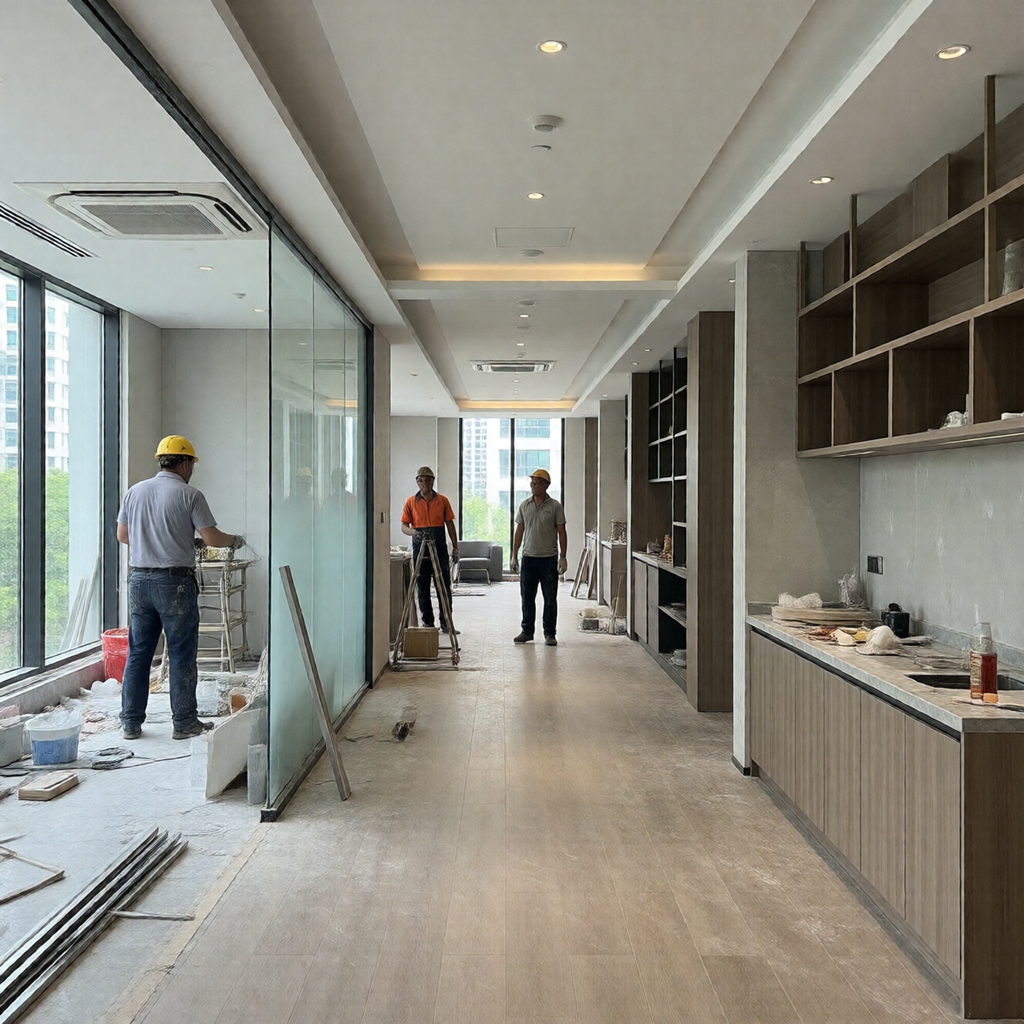
Table of Contents
- What Is Commercial Reinstatement?
- What Affects Commercial Reinstatement Cost?
- Common Commercial Reinstatement Works
- Understanding the Reinstatement Process
- Why Landlord Requirements Matter
- How to Compare Reinstatement Quotations
- Common Budget Mistakes to Avoid
- Preparing for the Final Handover
- How to Reduce Reinstatement Delays
- Conclusion
1. What Is Commercial Reinstatement?
Commercial reinstatement refers to restoring a rented commercial property to the condition required for handover when a tenancy ends.
During a tenancy, businesses may modify the premises to suit their operations. This could involve installing office partitions, flooring, cabinets, lighting, signage, meeting rooms, counters or other fixtures.
When the tenancy ends, some or all of these alterations may need to be removed.
The exact scope depends on the tenancy agreement, original property condition, landlord requirements and any approved renovation specifications.
For this reason, commercial reinstatement Singapore projects should be planned according to the actual handover requirements rather than assuming that every commercial property needs the same work.
2. What Affects Commercial Reinstatement Cost?
There is no single price that applies to every commercial reinstatement project. Several factors can influence the final quotation.
Size of the Premises
A larger property generally requires more labour, disposal work and restoration. A small retail unit may have a very different reinstatement scope from a large office, showroom or commercial unit.
Amount of Renovation
Properties with extensive renovation usually require more work during reinstatement.
For example, a tenant may have installed:
- Multiple partition walls
- Built-in cabinets
- Feature walls
- Raised flooring
- Additional electrical points
- Custom counters
- Ceiling modifications
- Decorative finishes
- Signage and branding elements
The more alterations that have been made, the more work may be required to restore the premises.
Materials and Finishes
Removing different materials requires different methods. Flooring, glass partitions, carpentry, plasterboard walls and ceiling systems can all require different labour and disposal arrangements.
Restoration may also require matching or repairing existing finishes.
Disposal Requirements
Reinstatement generates construction waste and unwanted fixtures. The amount of waste produced can affect the overall project cost.
Large quantities of demolished materials may require additional handling, transportation and disposal arrangements.
Repair and Restoration
Removing an installation does not necessarily mean the job is finished.
Walls may require patching, holes may need to be repaired and surfaces may need repainting. Flooring or ceiling areas can also require restoration after fixtures are removed.
3. Common Commercial Reinstatement Works
Every project is different, but several types of work commonly appear in commercial reinstatement quotations.
These may include removal of:
- Office partitions
- Glass doors and panels
- Built-in cabinets
- Reception counters
- Display structures
- Signage
- Carpentry
- Floor finishes
- Wall features
- Ceiling additions
- Unwanted fixtures
Restoration can then include:
- Wall patching
- Surface preparation
- Painting
- Floor repairs
- Ceiling repairs
- Removal of redundant installations
- Cleaning
- General making-good works
Some projects may also require electrical or mechanical elements to be restored depending on what was installed during the tenancy.
Businesses should therefore obtain a clear scope of work before approving the project.
4. Understanding the Reinstatement Process
A well-organised commercial reinstatement project usually starts well before the final tenancy date.
Step 1: Review the Tenancy Requirements
The first step is to determine what the landlord expects to be removed, restored or retained.
Review the tenancy agreement and any renovation documentation available.
Step 2: Inspect the Property
A site inspection allows the contractor to identify existing installations and assess the condition of the premises.
This is important because photographs or old renovation drawings may not show every modification currently present.
Step 3: Prepare the Scope of Work
The required removal and restoration works should be documented clearly.
A detailed scope helps the tenant understand what is included in the quotation.
Step 4: Obtain Quotations
Businesses can then request quotations from reinstatement contractors in Singapore based on the same scope.
Comparing quotations becomes easier when each contractor is pricing the same work.
Step 5: Schedule the Works
The reinstatement timeline should be coordinated with the tenant’s moving-out schedule and final handover date.
Step 6: Complete Removal and Restoration
The contractor carries out demolition, removal, disposal and restoration works according to the agreed scope.
Step 7: Inspect Before Handover
The completed premises should be checked carefully before the landlord’s final inspection.
5. Why Landlord Requirements Matter
One of the most important considerations is understanding what the landlord actually expects.
A tenant may believe that removing its furniture and equipment is enough, while the landlord may expect previous renovation works to be removed as well.
For example, a landlord could require certain partitions, flooring, cabinets, signs or other installations to be restored.
The original condition of the property can also be useful when determining what needs to be reinstated.
Tenants should therefore avoid relying only on assumptions. Clarifying the reinstatement requirements early can prevent additional work close to the handover date.
6. How to Compare Reinstatement Quotations
The cheapest quotation is not always the most cost-effective option.
When comparing commercial reinstatement quotations, check whether each quotation includes the same scope.
Look at items such as:
- Demolition
- Labour
- Disposal
- Transportation
- Wall repairs
- Painting
- Flooring restoration
- Ceiling repairs
- Cleaning
- Final touch-ups
A quotation that appears cheaper may exclude important restoration or disposal items.
It is also useful to ask whether additional costs could arise if hidden conditions are discovered during the work.
A clear quotation with an itemised scope can make budgeting much easier.
7. Common Budget Mistakes to Avoid
Businesses sometimes underestimate reinstatement costs because they focus only on demolition.
However, the project can involve several stages beyond removal.
For example, removing a partition may leave holes, damaged flooring or unfinished ceiling areas. These areas may then require making-good works before the property can be handed back.
Another common mistake is leaving the project too late.
When there is limited time before handover, businesses may have less opportunity to obtain alternative quotations or address additional requirements.
A proper inspection and scope assessment can reduce these risks.
8. Preparing for the Final Handover
Before the landlord conducts the final inspection, the tenant should walk through the entire premises.
Check walls, ceilings, floors, doors, fixtures and other areas affected by renovation.
Look for:
- Remaining unwanted fixtures
- Holes or visible damage
- Unfinished paintwork
- Damaged flooring
- Missing components
- Construction debris
- Areas requiring additional cleaning
A final internal inspection gives the contractor an opportunity to correct problems before the official handover.
Businesses should also keep relevant documentation, photographs and records of completed works where appropriate.
9. How to Reduce Reinstatement Delays
The best way to reduce delays is to start planning before the final move-out period.
Begin by reviewing the tenancy requirements and inspecting the premises.
Next, prepare the scope and obtain quotations early. Once a contractor is selected, coordinate the work with furniture removal, equipment relocation and the tenancy end date.
It is also useful to allow some time for unexpected work.
Commercial premises can contain modifications that are difficult to identify until fixtures and partitions are removed. Having some schedule flexibility can make the final handover less stressful.
For businesses planning a major restoration project, professional commercial reinstatement services can help coordinate demolition, removal and restoration as one organised process.
10. Conclusion
Commercial reinstatement in Singapore involves more than simply removing furniture before leaving a rented property. Depending on the tenancy requirements, businesses may need to remove renovation works, restore affected surfaces, dispose of materials and prepare the premises for final inspection.
The cost depends on factors such as property size, renovation scope, materials, disposal requirements and the amount of restoration needed.
Starting early, understanding the landlord’s requirements and comparing detailed quotations can help businesses control costs and reduce the risk of last-minute delays.
A properly planned commercial reinstatement Singapore project allows tenants to complete the restoration works systematically and prepare the property for a smoother handover.