
Table of Contents
- Introduction to Tile Overlay and Tile Hacking
- What Is Tile Hacking?
- What Is Tile Overlay?
- Key Differences Between Tile Hacking and Overlay
- Advantages of Tile Hacking
- Disadvantages of Tile Hacking
- Advantages of Tile Overlay
- Disadvantages of Tile Overlay
- Cost Comparison in Singapore
- When You Should Choose Tile Hacking
- When Tile Overlay Is a Better Option
- Common Mistakes Homeowners Make
- HDB and Condo Considerations
- How to Decide With Your Contractor
- Conclusion
Introduction to Tile Overlay and Tile Hacking
When renovating a home in Singapore, one of the most common flooring decisions homeowners face is whether to remove existing tiles or install new tiles over them.
This leads to two main options:
- Tile hacking (removing existing tiles completely)
- Tile overlay (installing new tiles on top of old ones)
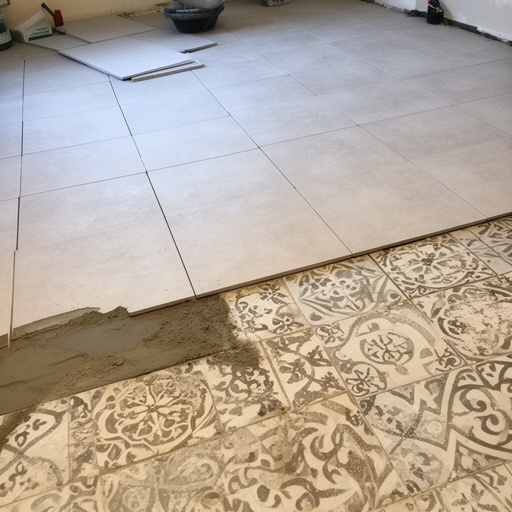
Both methods are widely used in HDB flats, condominiums, and landed properties. However, each has different advantages, costs, and suitability depending on the condition of the existing flooring.
Understanding the differences between tile overlay Singapore and tile hacking is important before starting any renovation project, as the wrong choice can lead to future issues such as uneven floors, hollow tiles, or unnecessary costs.
What Is Tile Hacking?
Tile hacking is the process of removing existing tiles completely before installing new flooring.
It involves breaking and clearing:
- Floor tiles
- Wall tiles (if needed)
- Adhesive layers
- Cement screed
Professional contractors use tools such as:
- Electric breakers
- Demolition hammers
- Scraping tools
After removal, the surface is cleaned and prepared for new tile installation.
Purpose of Tile Hacking
Tile hacking is done to:
- Remove damaged tiles
- Fix uneven flooring
- Reset the base surface
- Prepare for new renovation designs
It is often used when the existing flooring is no longer suitable for overlay.
What Is Tile Overlay?
Tile overlay involves installing new tiles directly on top of existing tiles without removing them.
This method is used when the existing floor is still:
- Stable
- Level
- Structurally sound
A bonding agent or adhesive is applied over the old surface before new tiles are installed.
Purpose of Tile Overlay
Tile overlay is commonly used to:
- Speed up renovation work
- Reduce hacking noise and dust
- Save time and cost
It is often chosen for simple upgrades where full floor removal is not necessary.
Key Differences Between Tile Hacking and Overlay
Tile Hacking
- Removes old tiles completely
- Requires more time and labour
- Produces dust and debris
- Allows full inspection of base structure
Tile Overlay
- Keeps existing tiles
- Faster installation
- Less noise and mess
- Limited surface correction
Main Difference
Tile hacking focuses on resetting the floor, while tile overlay focuses on upgrading over existing surfaces.
Advantages of Tile Hacking
1. Stronger and More Reliable Base
Hacking allows contractors to prepare a fresh surface, improving long-term durability.
2. Fix Hidden Problems
It helps uncover:
- Cracks in screed
- Water damage
- Uneven surfaces
3. Better Flooring Options
A clean base allows installation of:
- Large-format tiles
- Heavy tiles
- Different materials
4. Longer Lifespan
Properly installed tiles on a fresh base tend to last longer.
Disadvantages of Tile Hacking
1. More Noise and Dust
Hacking creates significant disruption during renovation.
2. Longer Renovation Time
Additional steps such as removal and disposal are required.
3. Higher Labour Effort
More manpower and equipment are needed compared to overlay.
Advantages of Tile Overlay
1. Faster Renovation
Since existing tiles remain, installation is quicker.
2. Less Noise and Dust
Overlay reduces disruption, making it more neighbour-friendly.
3. Lower Immediate Cost
Less labour and demolition work may reduce upfront costs.
4. Convenient for Light Upgrades
Suitable when existing tiles are still in good condition.
Disadvantages of Tile Overlay
1. Floor Height Increase
Adding a new layer raises floor levels, which may affect:
- Door clearance
- Skirting alignment
- Room transitions
2. Hidden Problems Remain
Issues like:
- Hollow tiles
- Water seepage
- Cracks
may remain underneath.
3. Limited Long-Term Durability
If the base is not strong, problems may appear later.
Cost Comparison in Singapore
Tile Hacking
Generally more expensive due to:
- Labour
- Debris removal
- Surface preparation
Tile Overlay
Usually cheaper upfront because:
- No demolition required
- Less waste disposal
- Faster installation
Important Note
While overlay may seem cheaper, hacking may be more cost-effective long-term if the existing floor has issues.
When You Should Choose Tile Hacking
Tile hacking is recommended when:
- Tiles are cracked or hollow
- Floor is uneven
- Water damage is present
- You want a full renovation reset
- Changing to premium tile types
It is the preferred method for long-term renovation quality.
When Tile Overlay Is a Better Option
Tile overlay is suitable when:
- Existing tiles are stable
- No hollow or loose areas
- You want a quick upgrade
- Budget or time is limited
- Minimal renovation is required
It works best for cosmetic improvements.
Common Mistakes Homeowners Make
Choosing Overlay Without Inspection
Many homeowners choose overlay without checking for:
- Hollow tiles
- Structural issues
Ignoring Floor Height Changes
This can affect doors and transitions between rooms.
Focusing Only on Cost
Cheaper upfront cost may lead to expensive repairs later.
Not Consulting Contractors
Professional assessment is important before deciding.
HDB and Condo Considerations
In Singapore residential properties, both methods must follow renovation guidelines.
Important considerations include:
- Noise restrictions (for hacking)
- Approval for renovation works
- Structural safety rules
- Building management requirements
Some condos may also have specific flooring requirements.
How to Decide With Your Contractor
A professional contractor will usually inspect:
- Floor condition
- Tile bonding strength
- Moisture levels
- Screed condition
Based on this, they will recommend:
- Tile hacking for long-term durability
- Tile overlay for light renovation needs
Always request a proper site assessment before deciding.
Conclusion
Both tile hacking and tile overlay are widely used renovation methods in Singapore, but each serves a different purpose.
Tile hacking is ideal for homeowners who want a complete reset and long-term durability, while tile overlay is better for quick, cost-efficient upgrades when the existing floor is still in good condition.
Understanding the differences between tile overlay Singapore and tile hacking helps homeowners make better renovation decisions, avoid future problems, and achieve more satisfactory results.
Choosing the right method ultimately depends on your floor condition, budget, and renovation goals. Feel free to consult us for tiling works in Singapore.